GUILLERMO PERDOMO — SCULPTING THE HUMAN FORM
This portrait series documents Salvadoran sculptor Guillermo Perdomo during a period in which his work explored the relationship between the human body, organic transformation, and the expressive possibilities of sculpture. Known for his figurative approach and his ability to reinterpret the human form through abstraction, Perdomo has developed a body of work that balances technical mastery with emotional depth. His sculptures often suggest movement, tension, introspection, and transformation rather than literal representation.
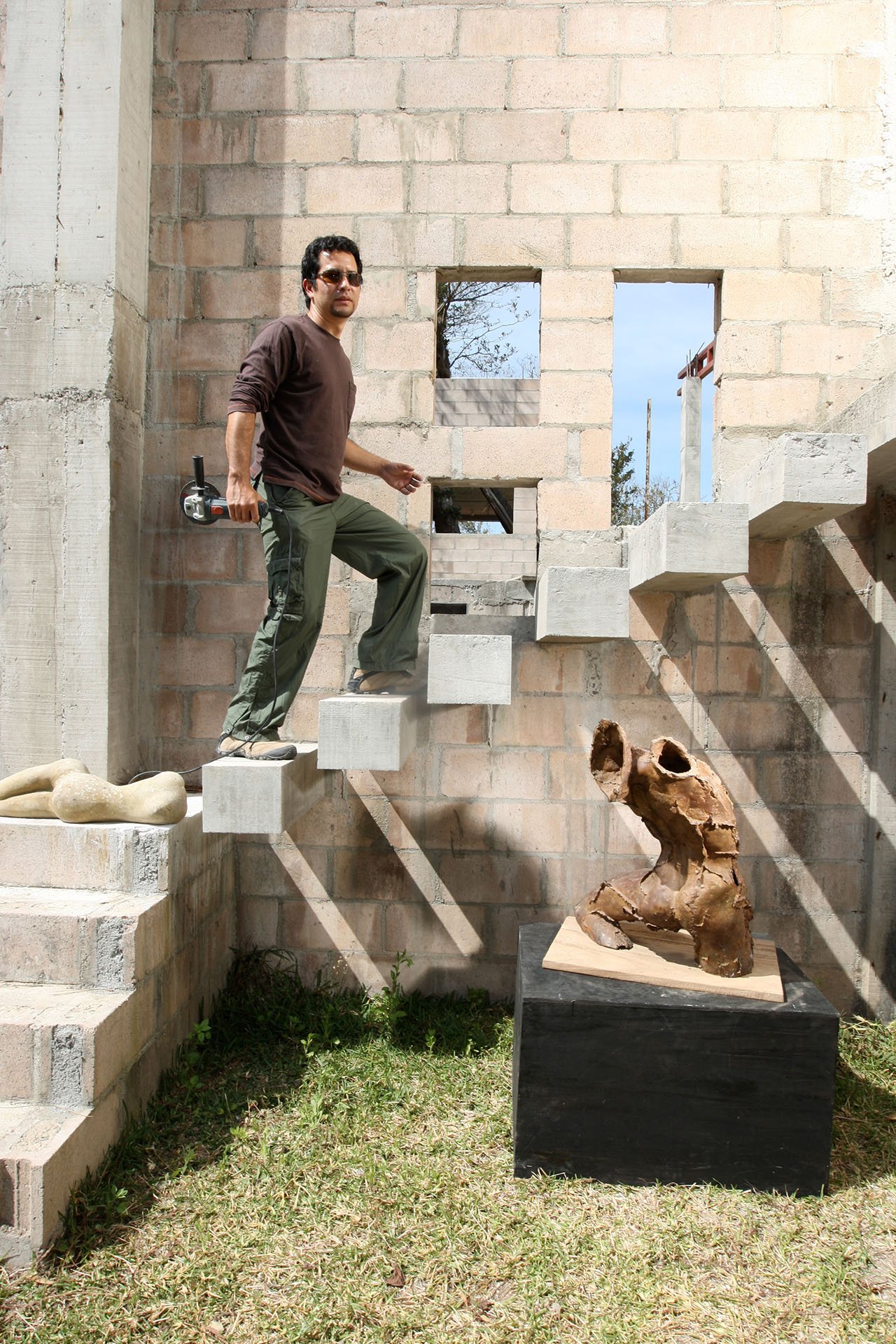
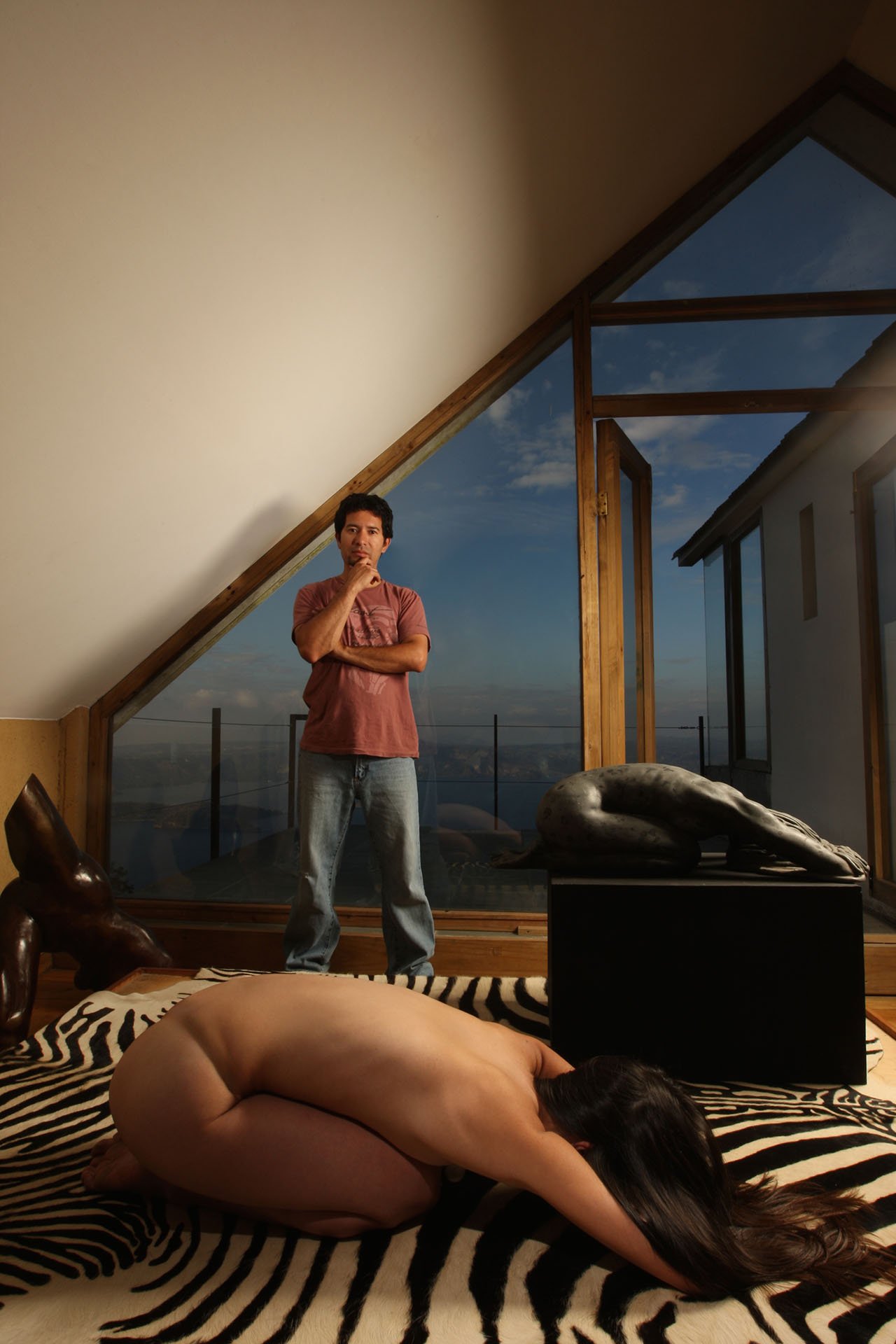
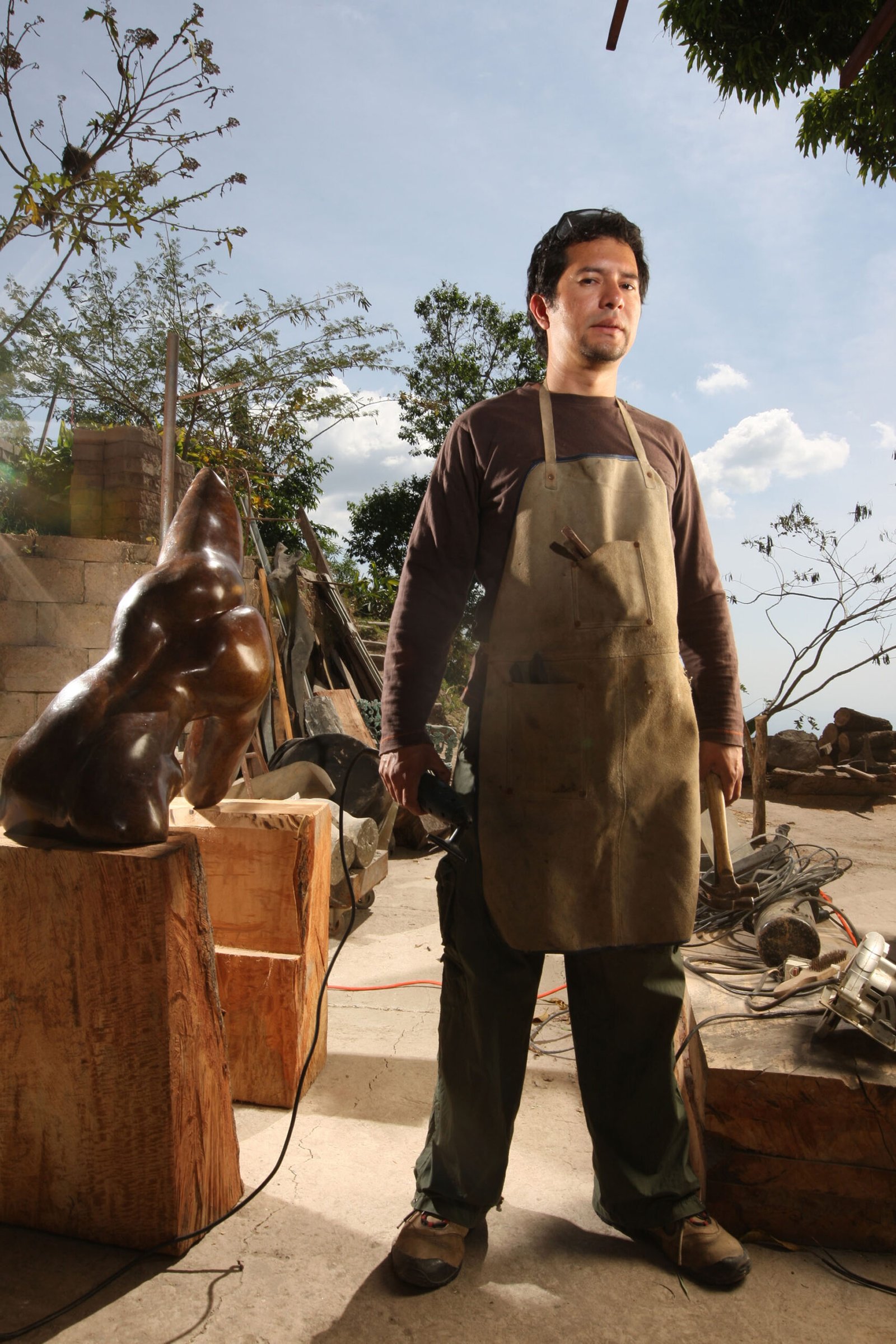
Rather than photographing the artist in a traditional studio setting, this project sought to place him within the environments where his ideas materialize. The images move between workshop, architectural space, and sculptural landscape, creating visual parallels between the artist and his creations. Tools, unfinished structures, natural light, and the surrounding environment become part of the narrative, revealing both the physical and conceptual dimensions of his practice.
The photographic approach combined environmental portraiture with editorial storytelling. Wide-angle perspectives, dramatic scale relationships, and carefully crafted lighting were used to emphasize the sculptural qualities of both the artwork and the artist himself. What makes this series particularly significant is its use of a hybrid lighting approach that combined available natural light with studio lighting. At the time these photographs were created, this technique was not yet widely adopted in editorial portraiture in El Salvador. Rather than overpowering the scene, the artificial light was carefully balanced with the existing ambient light to preserve the authenticity of each location while introducing depth, separation, and visual drama.
This fusion of natural and controlled light allowed the photographs to maintain a cinematic quality that still feels contemporary nearly two decades later. While many images from the period can be immediately identified by the lighting trends of their time, these portraits retain a timeless visual language. The deliberate integration of studio lighting into real environments helped create images that feel both documentary and highly crafted, bridging the gap between editorial storytelling and fine art portraiture.
In several photographs, Perdomo appears almost as one of his own sculptures—integrated into the geometry of the space and surrounded by forms that echo the themes present in his work. Architecture, landscape, and sculpture become equal participants in the composition, reinforcing the connection between artist, process, and place.
Produced for Revista BLUR, this assignment aimed to go beyond simple documentation. The intention was to create a visual portrait of the creative process itself: a dialogue between maker, material, and space. The resulting series presents Guillermo Perdomo not only as a sculptor, but as an artist whose life and environment are inseparable from the forms he creates. Nearly twenty years later, the photographs continue to resonate as an example of how thoughtful lighting, strong environmental portraiture, and editorial storytelling can transcend trends and remain visually relevant across generations.